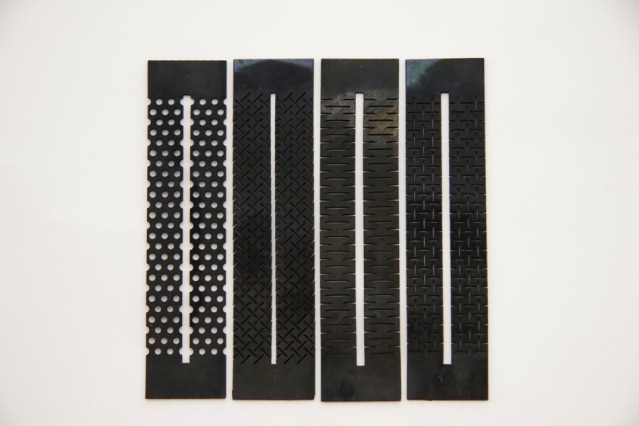
MIT researchers have developed soft sensors using conductive silicone sheets. As the sensorized arm stretches and compresses, electrical resistance is converted to an output voltage that’s used as a signal correlating to that movement. Credit: Ryan L. Truby, MIT CSAIL
Researchers at the Massachusetts Institute of Technology announced that they have enabled a soft robotic arm to understand its configuration in 3D space using only motion and position data from its own “sensorized” skin.
Editor’s Note: This article was republished from MIT News.
The post ‘Sensorized’ skin enables soft robotic arm to feel its own way at MIT appeared first on The Robot Report.