
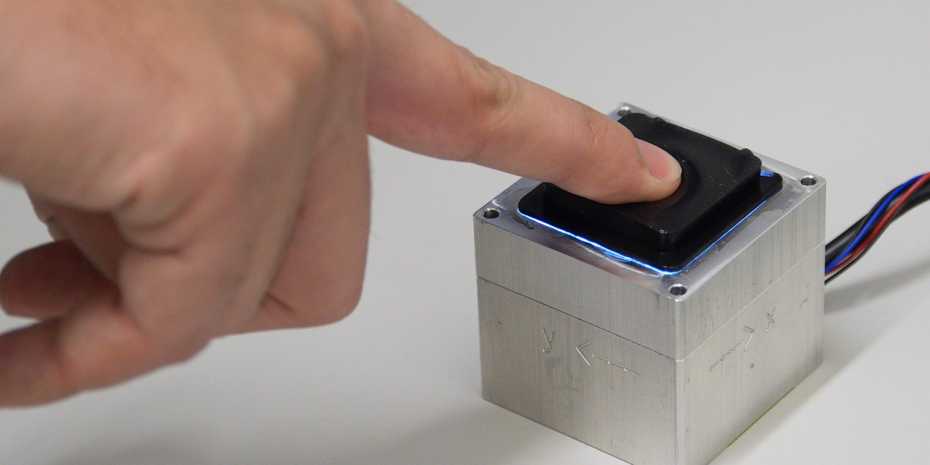
Machine learning helps researchers build low-cost tactile sensor

tactile sensor

Robotics researchers at ETH Zurich designed this tactile sensor prototype. | Credit: ETH Zurich

Robotics researchers at ETH Zurich have now developed a tactile sensor that could come in handy in just such an instance – and marks what they see as a significant step towards “robotic skin.” The sensor’s extremely simple design makes it inexpensive to produce, as the engineers point out. Essentially, it consists of an elastic silicone “skin” with colored plastic microbeads and a regular camera affixed to the underside.

The post Machine learning helps researchers build low-cost tactile sensor appeared first on The Robot Report.

More Related Posts

Ergonomics 101 for factory managers | Robotiq

Discover the fundamentals of factory ergonomics and why they matter more than...

7 cobots released so far in 2024

Robots working with humans to support a range of flexible applications has...

Supercomputing, Paper Cutting Underpin Stretchable Electronics Research

Some wearable electronics—like sensors sewn into fabrics, or applicable “skins”—rely on the...

Home

Highly Niched Headhunters Specialized in Physical AI/Robotics, High-Performance Computing, Unmanned/Autonomous Systems, Defense Technology and Energy.

Specializations

We recruit across complex engineering markets where understanding the technology is critical to finding the right talent.

How We Work

Overview of how PACE partners with teams: Our process, what clients get, and why PACE is different.

About Us

PACE’s story, values, and culture define how we operate and who we are.

News & Insights

Stay up to date on industry trends.

Contact

All the information needed for anyone interested in contacting us.