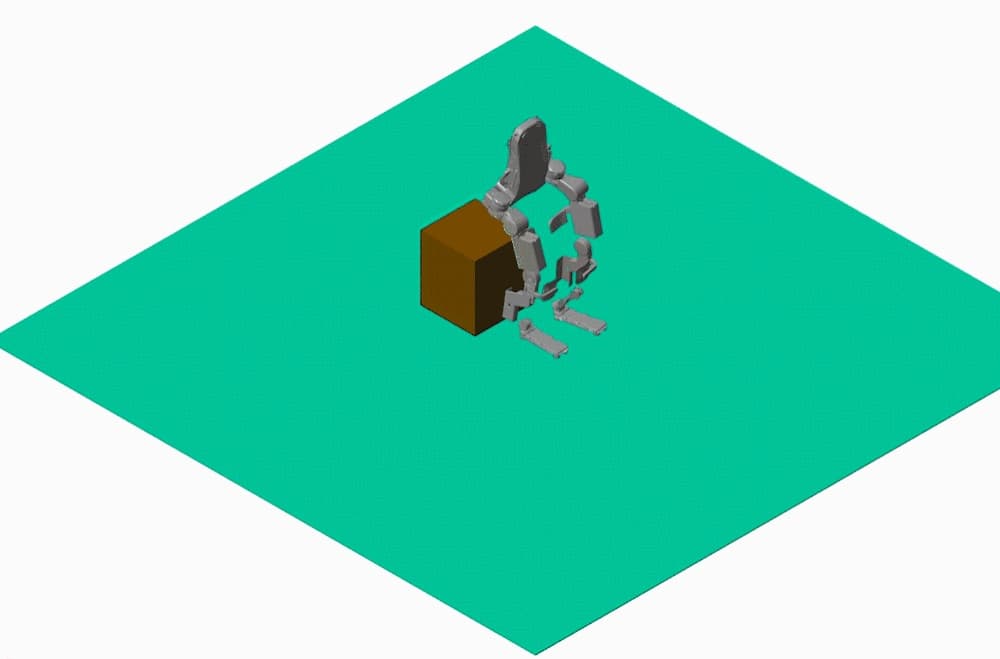
A virtual Atlante exoskeleton moving from sitting to standing position. | Credit: University of Michigan
Exoskeleton users can now go from sitting to standing safely and without assistance based on the work of University of Michigan researchers, who developed an approach to create and test solutions to such problems virtually.
“We now have a way to systematically design control objectives for highly constrained systems such that the objectives are not in conflict with the contact constraints,” said Eva Mungai, a PhD candidate in Mechanical Engineering.
The post Designing sit-to-stand motions for lower-limb exoskeletons appeared on The Robot Report.