Researchers build system to autonomously track Arctic ice melt

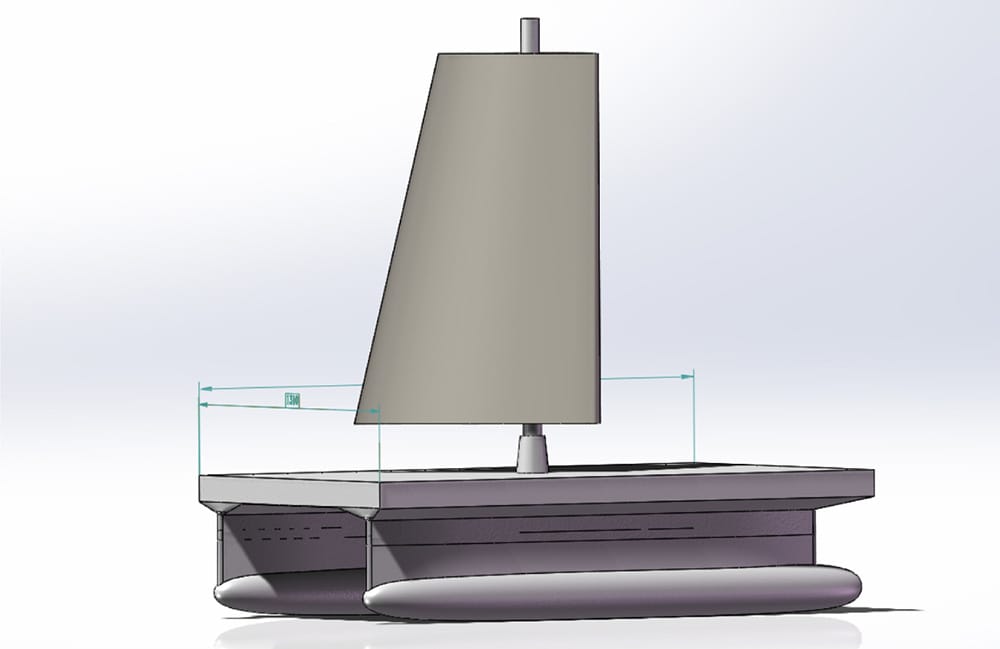
The conceptual design features a small waterplane area twin hull vessel that acts as a docking and charging station for autonomous underwater vehicles and aerial drones, using solar and turbine energy to enable continuous monitoring.

Researchers from the College of Engineering and Computer Science at Florida Atlantic University proposed an alternative, autonomous method of observing Arctic ice. The researchers say this method holds promise for improving the autonomy of marine vehicles, aiding in maritime missions, and gaining a deeper understanding of how melting Arctic sea ice affects marine ecosystems.

The post Researchers build system to autonomously track Arctic ice melt appeared first on The Robot Report.
More Related Posts

Supercomputer Simulations Reveal Secrets of the Universe’s First Galaxies, ASIAA Reports

Utilizing high-resolution three-dimensional radiation hydrodynamics simulations and detailed supernova physics model run...

ACCESS: Enhancing Hurricane Forecasts

Md Murad Hossain Khondaker and Mostafa Momen recently published their study titled...

Accelerating Science with AI in HPC

High-performance computing (HPC) has played a major role in advancing scientific research...

Home

Highly Niched Headhunters Specialized in Physical AI/Robotics, High-Performance Computing, Unmanned/Autonomous Systems, Defense Technology and Energy.

Specializations

We recruit across complex engineering markets where understanding the technology is critical to finding the right talent.

How We Work

Overview of how PACE partners with teams: Our process, what clients get, and why PACE is different.

About Us

PACE’s story, values, and culture define how we operate and who we are.

News & Insights

Stay up to date on industry trends.

Contact

All the information needed for anyone interested in contacting us.