
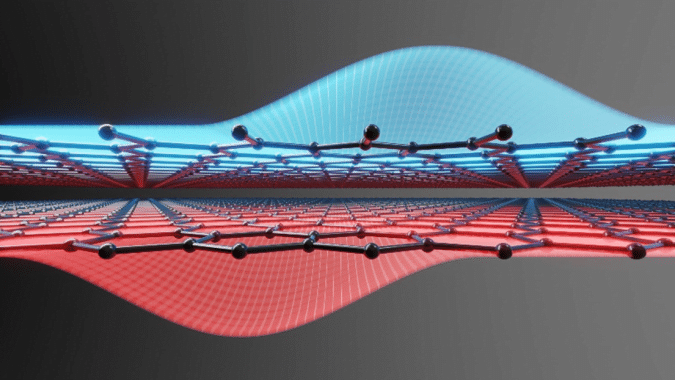
Graphene Quantum Dots Exhibit Near Perfect Particle-Hole Symmetry

bilayer graphene

Scientists confirmed that bilayer graphene can produce better results working as a semiconductor than silicon or gallium arsenide when the materials are used for hosting quantum bits in quantum information processing. At Forschungszentrum Jülich’s Helmholtz Nano Facility, scientists created double quantum dots in bilayer graphene that exhibited near perfect electron-hole symmetry. Their efforts are paving the way to achieve efficient quantum computers.

The post Graphene Quantum Dots Exhibit Near Perfect Particle-Hole Symmetry appeared first on HPCwire.

More Related Posts

Getting Your Robot Startup Into The Big Leagues – The ABCD Approach

FedEx’s Aaron Prather discusses the four critical steps robotics start-ups must take...

Open Compute Project Foundation Expands Open Edge Ecosystem

The Open Compute Project Foundation (OCP), the nonprofit organization bringing hyperscale innovations...

How Boston Dynamics makes Atlas run, flip & vault

What does it take for a robot to run, flip, vault, and...

Home

Highly Niched Headhunters Specialized in Physical AI/Robotics, High-Performance Computing, Unmanned/Autonomous Systems, Defense Technology and Energy.

Specializations

We recruit across complex engineering markets where understanding the technology is critical to finding the right talent.

How We Work

Overview of how PACE partners with teams: Our process, what clients get, and why PACE is different.

About Us

PACE’s story, values, and culture define how we operate and who we are.

News & Insights

Stay up to date on industry trends.

Contact

All the information needed for anyone interested in contacting us.