How telehealth could improve next-gen exoskeletons

exoskeleton

Four years after entering into a collaboration with researchers at Harvard University to develop wearable exoskeletons for patients with limited mobility, ReWalk Robotics revised the research agreement to extend the terms of the collaboration. Continuing the ongoing project until March 2023, the research team will also investigate how their novel designs for exoskeletons may incorporate features that support the increasing demand for tele-healthcare, including remote data provision, analysis and remote physical therapy for patients with their therapists.

The post How telehealth could improve next-gen exoskeletons appeared first on The Robot Report.
More Related Posts

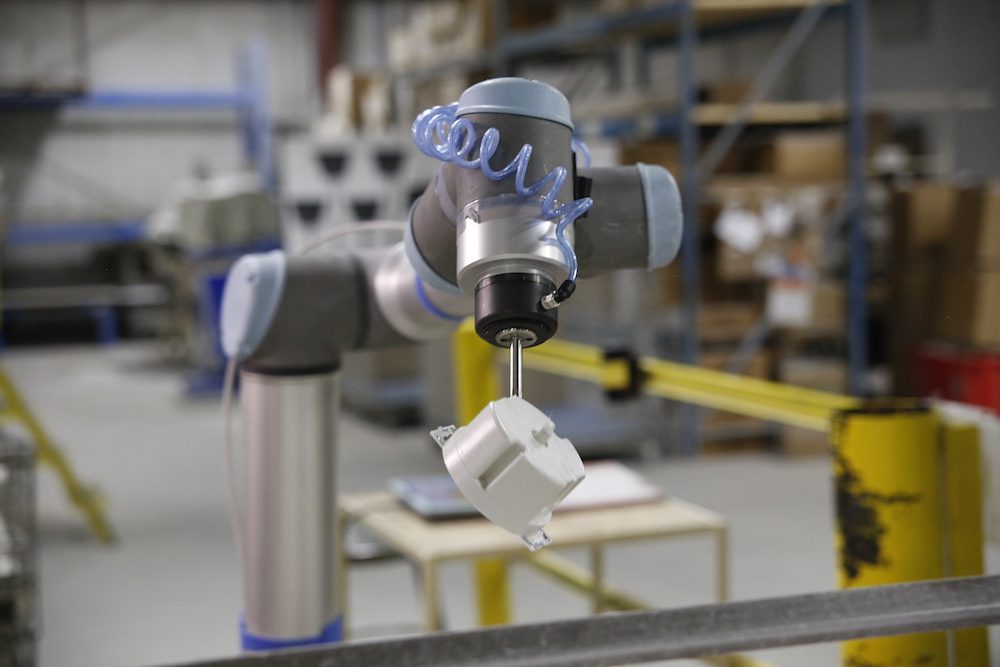
Universal Robots’ ActiNav handles challenging bin-picking task

ActiNav’s high-resolution sensor and CAD matching enable high accuracy picks. | Credit:...

Collaborative Robots Spot On for Small-to-Medium Manufacturers, But Challenges Remain

For small-to-medium manufacturers (SMMs), especially those with high-mix, low-volume production loads, collaborative...

Alphabet testing robots to autonomously clean offices

Alphabet is testing how well a fleet of robots can clean some...

Home

Highly Niched Headhunters Specialized in Physical AI/Robotics, High-Performance Computing, Unmanned/Autonomous Systems, Defense Technology and Energy.

Specializations

We recruit across complex engineering markets where understanding the technology is critical to finding the right talent.

How We Work

Overview of how PACE partners with teams: Our process, what clients get, and why PACE is different.

About Us

PACE’s story, values, and culture define how we operate and who we are.

News & Insights

Stay up to date on industry trends.

Contact

All the information needed for anyone interested in contacting us.