
Los Alamos Team Unlocks the Potential of Spin-Exchange in Quantum Dots

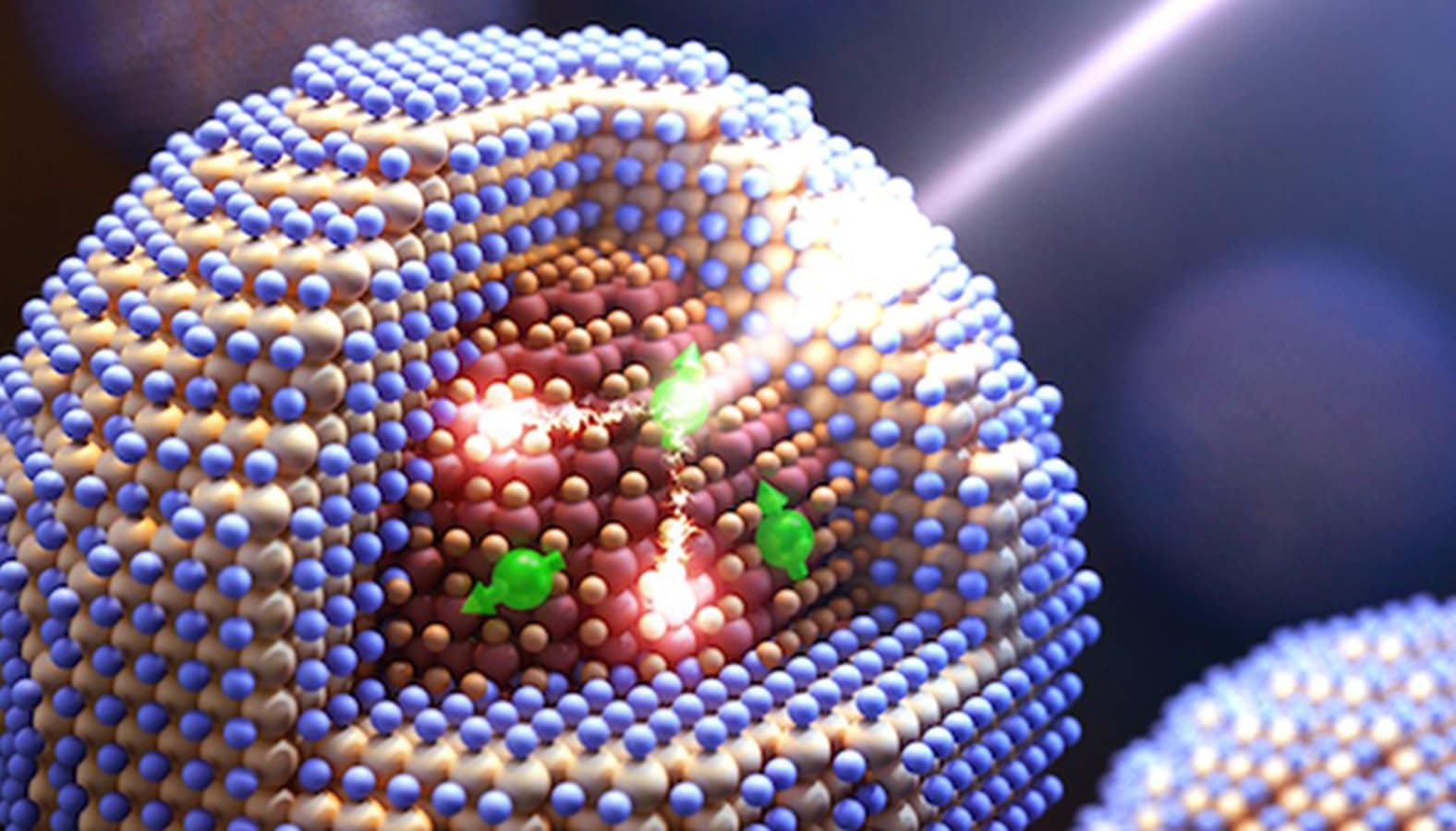
When it comes to producing excitons, manganese-doped quantum dots with a lead-selenide core and cadmium-selenide shell offer a two-for-one deal, with spin-exchange carrier multiplication converting a single photon into two excitons.

A new approach to developing semiconductor materials at tiny scales could help boost applications that rely on converting light to energy. A Los Alamos-led research team incorporated magnetic dopants into specially engineered colloidal quantum dots — nanoscale-size semiconductor crystals — and was able to achieve effects that may power solar cell technology, photo detectors and applications that depend on light to drive chemical reactions. 

The post Los Alamos Team Unlocks the Potential of Spin-Exchange in Quantum Dots appeared first on HPCwire.


More Related Posts

Students teach AI to make beer

Humans have been brewing beer for more than 5,000 years, and the...

New Study Warns of Catastrophic Overtraining in Large Language Models

The race to build ever-larger language models is being driven by the...

UC Berkeley’s AI-powered robot learns Jenga whipping

At UC Berkeley, researchers in Sergey Levine’s Robotic AI and Learning Lab...

Home

Highly Niched Headhunters Specialized in Physical AI/Robotics, High-Performance Computing, Unmanned/Autonomous Systems, Defense Technology and Energy.

Specializations

We recruit across complex engineering markets where understanding the technology is critical to finding the right talent.

How We Work

Overview of how PACE partners with teams: Our process, what clients get, and why PACE is different.

About Us

PACE’s story, values, and culture define how we operate and who we are.

News & Insights

Stay up to date on industry trends.

Contact

All the information needed for anyone interested in contacting us.