Oregon State Scientists Use Bridges-2 to Survey Plankton Populations

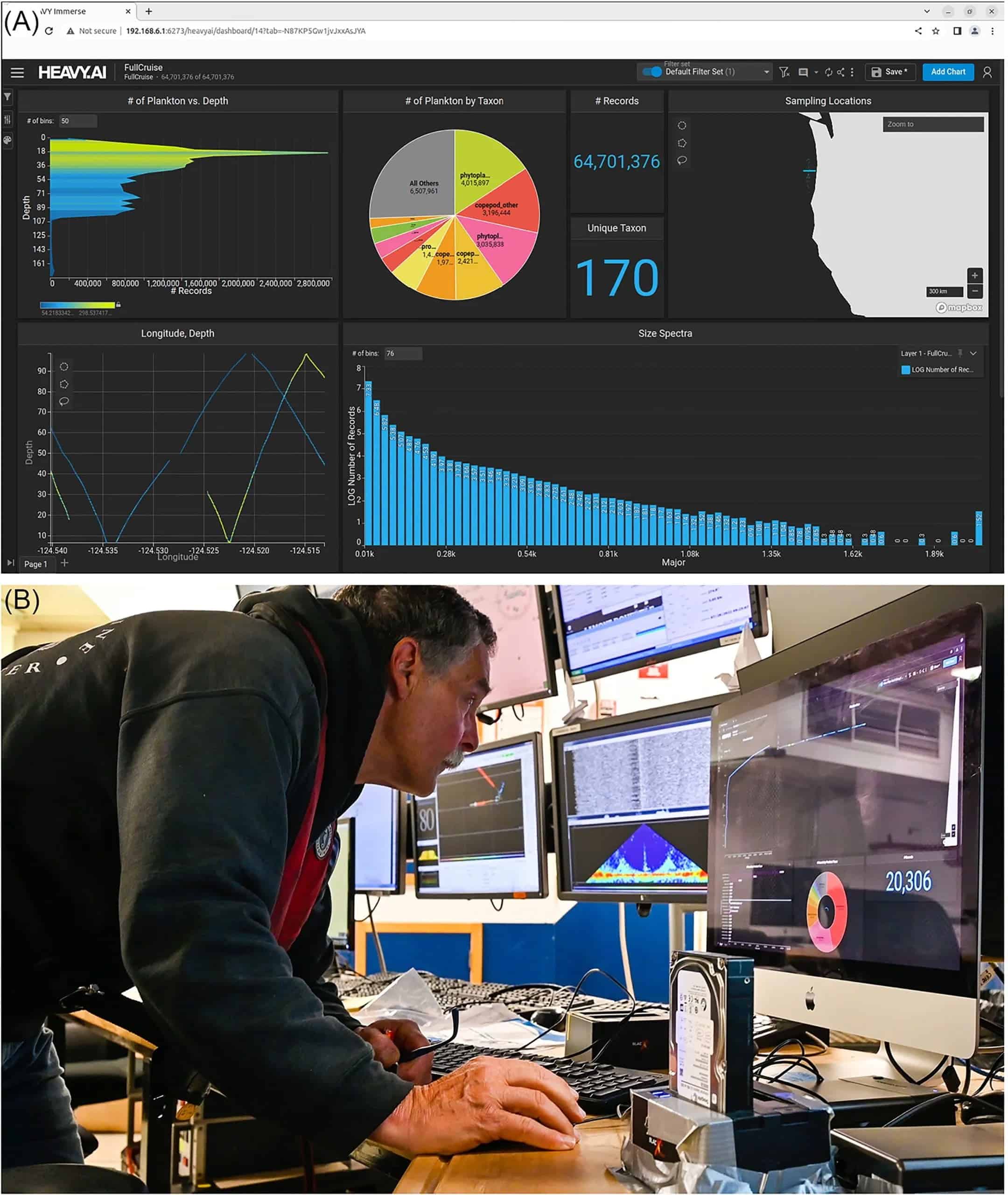
The HeavyAI dashboard displayed on the adaptive sampling display used to analyze the ISIIS-DPI images; (B) This setup lends itself to near real-time data exploration and adaptive sampling.

The ocean provides about half of the oxygen necessary for humans to survive. Scientists at Oregon State University wanted to better understand how plankton populations in the ocean will respond to climate change. To study plankton populations, they developed a new way of photographing large populations of these creatures at sea, using PSC’s Bridges-2 system to analyze and identify plankton. They’ve now adapted this AI classifier to use in an onboard computer, giving them the ability to redirect their cruises on the fly, with deeper analysis using Bridges-2 back on land.

The post Oregon State Scientists Use Bridges-2 to Survey Plankton Populations appeared first on HPCwire.

More Related Posts

NTT Develops Optical Fiber-Coupled Quantum Light Source

NTT Corporation (NTT, President & CEO: Jun Sawada, Chiyoda-ku, Tokyo) in cooperation...

From surge to sobriety: the state of robotics investment in 2024

Over the last several years, the investment environment has been tough for...

Idaho National Laboratory’s Bitterroot Supercomputer to Support Advanced Nuclear Reactors

If you’ve ever driven to a remote area, you may have noticed...

Home

Highly Niched Headhunters Specialized in Physical AI/Robotics, High-Performance Computing, Unmanned/Autonomous Systems, Defense Technology and Energy.

Specializations

We recruit across complex engineering markets where understanding the technology is critical to finding the right talent.

How We Work

Overview of how PACE partners with teams: Our process, what clients get, and why PACE is different.

About Us

PACE’s story, values, and culture define how we operate and who we are.

News & Insights

Stay up to date on industry trends.

Contact

All the information needed for anyone interested in contacting us.