Path-planning algorithm guides penguin-counting drones

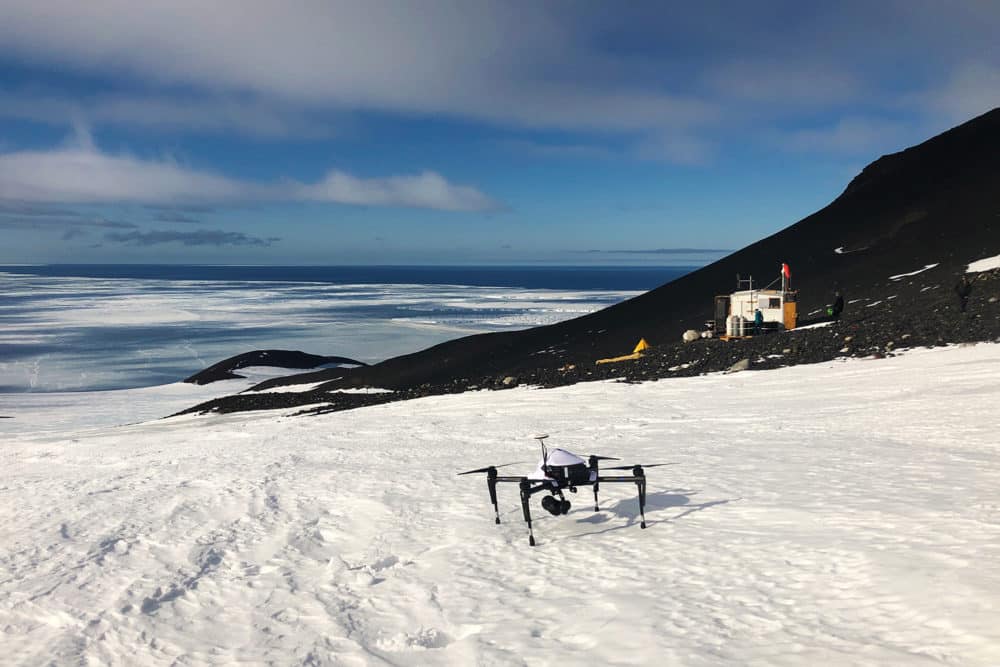
One of the autonomous drones used to survey penguins in Antartica. Credit: Parker Levinson

Stanford University researcher Mac Schwager entered the world of penguin counting through a chance meeting at his sister-in-law’s wedding in June 2016. There, he learned that Annie Schmidt, a biologist at Point Blue Conservation Science, was seeking a better way to image a large penguin colony in Antarctica. Schwager, who is an assistant professor of aeronautics and astronautics at Stanford University, saw an opportunity to collaborate, given his work on controlling swarms of autonomous flying robots.


More Related Posts

What Jobs Do Robots Create?

The jobs robots create demand a high skill level, so to build...

UC San Diego, MIT researchers create Open-TeleVision, an immersive teleoperation system

Teleoperation can be a powerful method, not only for performing complex tasks,...

Physicists Work To Shrink Microchips with First One-Dimensional Helium Model System

Microchips are everywhere, running computers and cars, and even helping people find...

Home

Highly Niched Headhunters Specialized in Physical AI/Robotics, High-Performance Computing, Unmanned/Autonomous Systems, Defense Technology and Energy.

Specializations

We recruit across complex engineering markets where understanding the technology is critical to finding the right talent.

How We Work

Overview of how PACE partners with teams: Our process, what clients get, and why PACE is different.

About Us

PACE’s story, values, and culture define how we operate and who we are.

News & Insights

Stay up to date on industry trends.

Contact

All the information needed for anyone interested in contacting us.