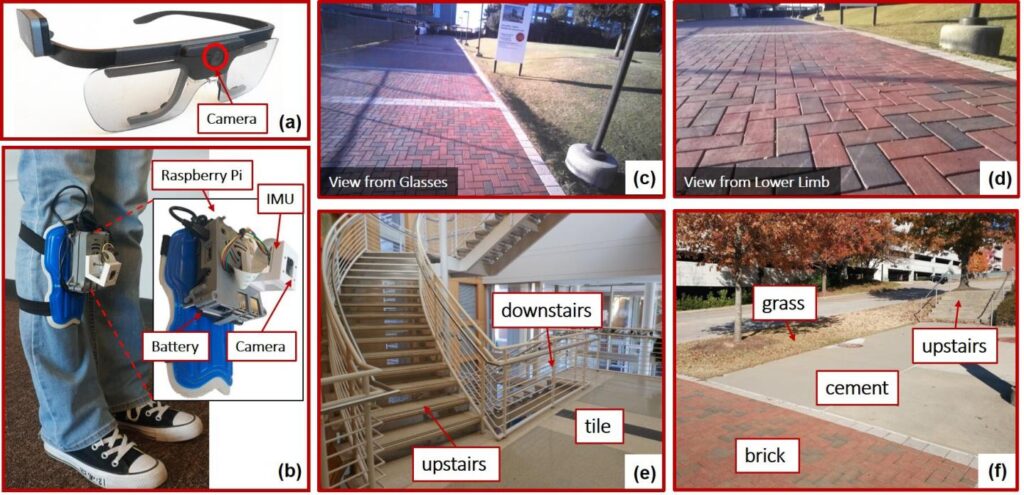
Imaging devices provide environmental context for robotic prosthetics. (a) On-glasses configuration using a Tobii Pro Glasses 2 eye tracker. (b) Lower limb data acquisition device. (c) and (d) Example frames from the cameras for the two configurations. (e) and (f) Example images of the experimental environment and terrains. Credit: Edgar Lobaton, NC State
Since bionic limbs often can’t rely on muscle contractions or nerve impulses to move as a normal arms or legs would, they need guidance from artificial intelligence. North Carolina State University researchers said they have developed software that can work with existing robotic prosthetics or exoskeletons to help people walk more naturally and safely over a variety of terrain.
The post Robotic prosthetics AI incorporates computer vision in NC State research appeared first on The Robot Report.