
Designing sit-to-stand motions for lower-limb exoskeletons

exoskeleton

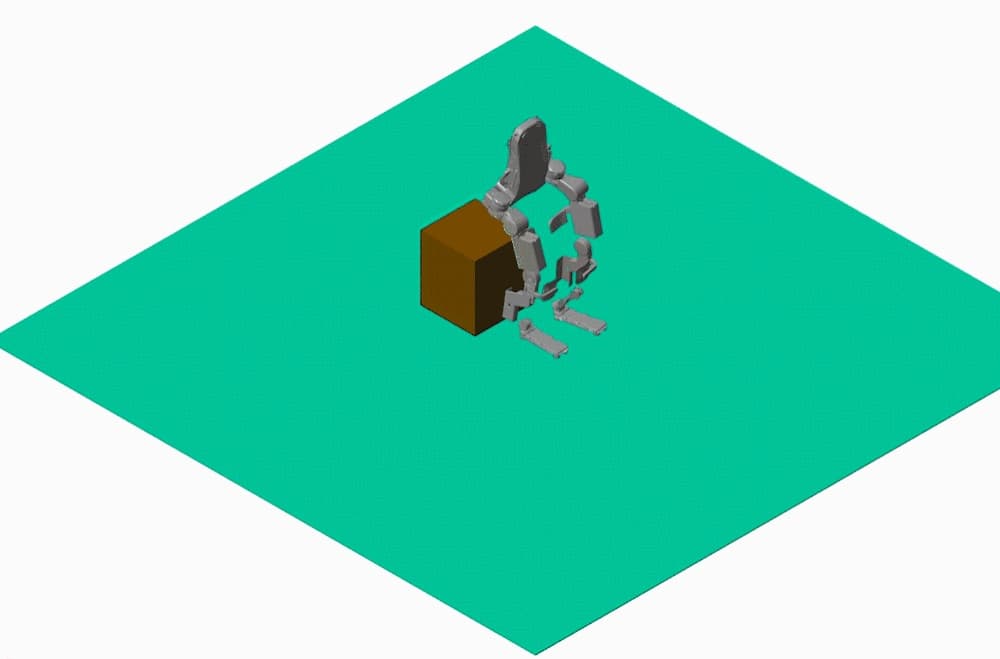
A virtual Atlante exoskeleton moving from sitting to standing position. | Credit: University of Michigan

Exoskeleton users can now go from sitting to standing safely and without assistance based on the work of University of Michigan researchers, who developed an approach to create and test solutions to such problems virtually.

“We now have a way to systematically design control objectives for highly constrained systems such that the objectives are not in conflict with the contact constraints,” said Eva Mungai, a PhD candidate in Mechanical Engineering.

The post Designing sit-to-stand motions for lower-limb exoskeletons appeared on The Robot Report.
More Related Posts

Deep Learning, Supercomputing Enable Unprecedented Permafrost Analysis

Permafrost covers more than 10 percent of the planet and stores vast...

Flexxbotics joins MassRobotics to improve utility of cobots

Flexxbotics, a Boston-based robotics startup, is now a resident of MassRobotics, an...

What’s New in HPC Research: BaGuaLu, PolyCoder, Turbulent Flows & More

In this regular feature, HPCwire highlights newly published research in the high-performance...

Home

Highly Niched Headhunters Specialized in Physical AI/Robotics, High-Performance Computing, Unmanned/Autonomous Systems, Defense Technology and Energy.

Specializations

We recruit across complex engineering markets where understanding the technology is critical to finding the right talent.

How We Work

Overview of how PACE partners with teams: Our process, what clients get, and why PACE is different.

About Us

PACE’s story, values, and culture define how we operate and who we are.

News & Insights

Stay up to date on industry trends.

Contact

All the information needed for anyone interested in contacting us.