‘Sensorized’ skin enables soft robotic arm to feel its own way at MIT

MIT sensorized skin

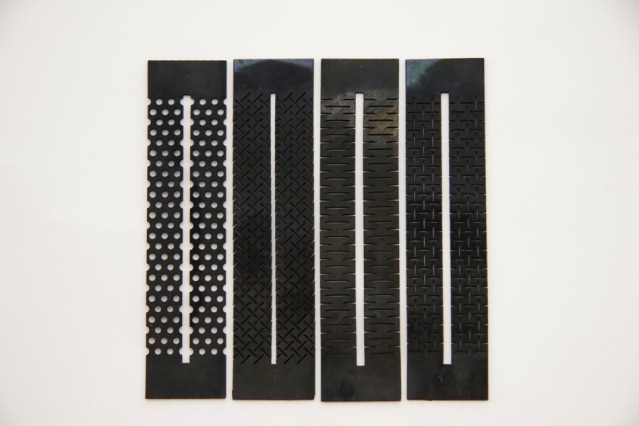
MIT researchers have developed soft sensors using conductive silicone sheets. As the sensorized arm stretches and compresses, electrical resistance is converted to an output voltage that’s used as a signal correlating to that movement. Credit: Ryan L. Truby, MIT CSAIL

Researchers at the Massachusetts Institute of Technology announced that they have enabled a soft robotic arm to understand its configuration in 3D space using only motion and position data from its own “sensorized” skin.

Editor’s Note: This article was republished from MIT News.

The post ‘Sensorized’ skin enables soft robotic arm to feel its own way at MIT appeared first on The Robot Report.
More Related Posts

ORNL Researchers Reach Quantum Networking Milestone in Real-World Environment

A team from the U.S. Department of Energy’s Oak Ridge National Laboratory,...

Rainbow Robotics unveils omnidirectional wheels, development kit for its dual-arm robot

Rainbow Robotics, a Korean robotics developer that spun out of the Humanoid...

3 women share advice for navigating the robotics industry

Women are an underrepresented group within the robotics industry. Today, women make...

Home

Highly Niched Headhunters Specialized in Physical AI/Robotics, High-Performance Computing, Unmanned/Autonomous Systems, Defense Technology and Energy.

Specializations

We recruit across complex engineering markets where understanding the technology is critical to finding the right talent.

How We Work

Overview of how PACE partners with teams: Our process, what clients get, and why PACE is different.

About Us

PACE’s story, values, and culture define how we operate and who we are.

News & Insights

Stay up to date on industry trends.

Contact

All the information needed for anyone interested in contacting us.