Stanford developing tetherless soft robot that changes shape

Stanford

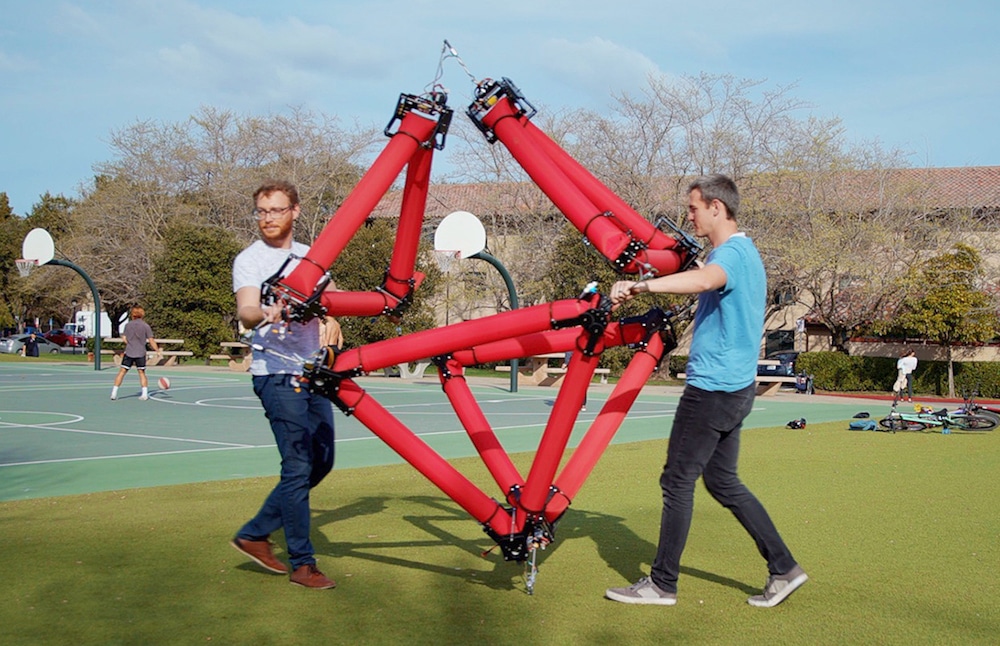
Graduate students Zachary Hammond (on left) and Nathan Usevitch pick up and move the isoperimetric robot, demonstrating that it is lightweight, resistant to damage and safe around humans. Credit: Farrin Abbott/Stanford University News

Advances in soft robotics could someday allow robots to work alongside humans, helping them lift heavy objects or carrying them out of danger. As a step toward that future, Stanford University researchers have developed a new kind of soft robot that, by borrowing features from traditional robotics, is safe while still retaining the ability to move and change shape.

The post Stanford developing tetherless soft robot that changes shape appeared first on The Robot Report.

More Related Posts

UN Proclaims 2025 as International Year of Quantum Science and Technology

June 10, 2024 — On Friday, the United Nations proclaimed 2025 as...

Top 10 robotics developments of July 2025 – The Robot Report

In July, the Robot Report launched a new program geared toward highlighting...

Cheetahs inspire NC State robots that can move faster, grasp more precisely

Soft robots are typically slower and are less precise for manipulation than...

Home

Highly Niched Headhunters Specialized in Physical AI/Robotics, High-Performance Computing, Unmanned/Autonomous Systems, Defense Technology and Energy.

Specializations

We recruit across complex engineering markets where understanding the technology is critical to finding the right talent.

How We Work

Overview of how PACE partners with teams: Our process, what clients get, and why PACE is different.

About Us

PACE’s story, values, and culture define how we operate and who we are.

News & Insights

Stay up to date on industry trends.

Contact

All the information needed for anyone interested in contacting us.