Scientists Use ORNL’s Summit Supercomputer to Learn How Cicada Wings Kill Bacteria

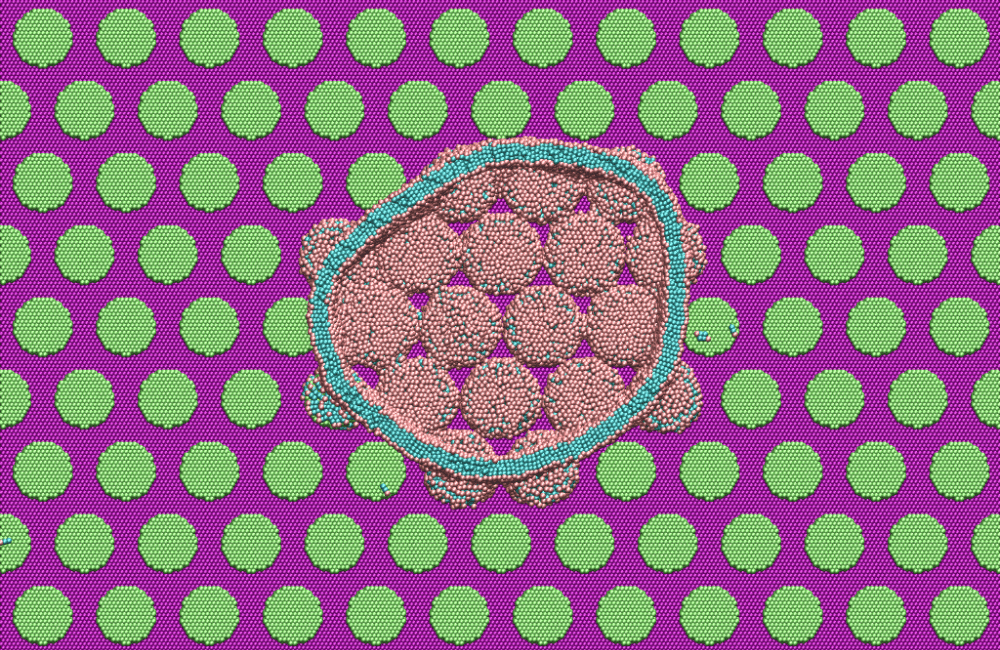
RNL researchers simulated the nanostructure of a cicada-wing-like surface to gain insight into its antibacterial abilities. Top view cross-section: simulated lipid bilayer vesicles interact with nanopillars, showcasing the lipid arrangement and membrane rupture in high-curvature regions.

Over the past decade, teams of engineers, chemists and biologists have analyzed the physical and chemical properties of cicada wings, hoping to unlock the secret of their ability to kill microbes on contact. If this function of nature can be replicated by science, it may lead to products with inherently antibacterial surfaces that are more effective than current chemical treatments.

The post Scientists Use ORNL’s Summit Supercomputer to Learn How Cicada Wings Kill Bacteria appeared first on HPCwire.


More Related Posts

ECP Application Will Deliver ‘Molecular Movies’ in Minutes

Amedeo Perazzo has a guarantee for researchers who want to see a...

CMU Robotics Institute AIs Learn New Tasks with Unprecedented Flexibility

Artificial intelligence is great at doing specific tasks. But AI algorithms tend...

MassRobotics announces Jumpstart Fellowship Program

There has been a steady growth of robotics companies and an increase...

Home

Highly Niched Headhunters Specialized in Physical AI/Robotics, High-Performance Computing, Unmanned/Autonomous Systems, Defense Technology and Energy.

Specializations

We recruit across complex engineering markets where understanding the technology is critical to finding the right talent.

How We Work

Overview of how PACE partners with teams: Our process, what clients get, and why PACE is different.

About Us

PACE’s story, values, and culture define how we operate and who we are.

News & Insights

Stay up to date on industry trends.

Contact

All the information needed for anyone interested in contacting us.