Supercomputer Research Uses Earthquakes to Model the Planet

earth's core diagram

The deepest hole ever dug by humans reached just over seven and a half miles into the planet — less than 1/1000th of the Earth’s nearly 8,000-mile diameter. Understanding the composition of our planet is, therefore, a challenging proposition that predominantly relies on the extrapolation of proxy metrics. Prominent among these metrics are seismic waves, which can be used to conduct “seismic tomography” on the planet, much like how a CT or MRI scan infers the structure of a living organism. As highlighted in a recent article from the Texas Advanced Computing Center (TACC), this field has experienced rapid advances in recent years thanks to the leveraging of supercomputing power.

The post Supercomputer Research Uses Earthquakes to Model the Planet appeared first on HPCwire.
More Related Posts

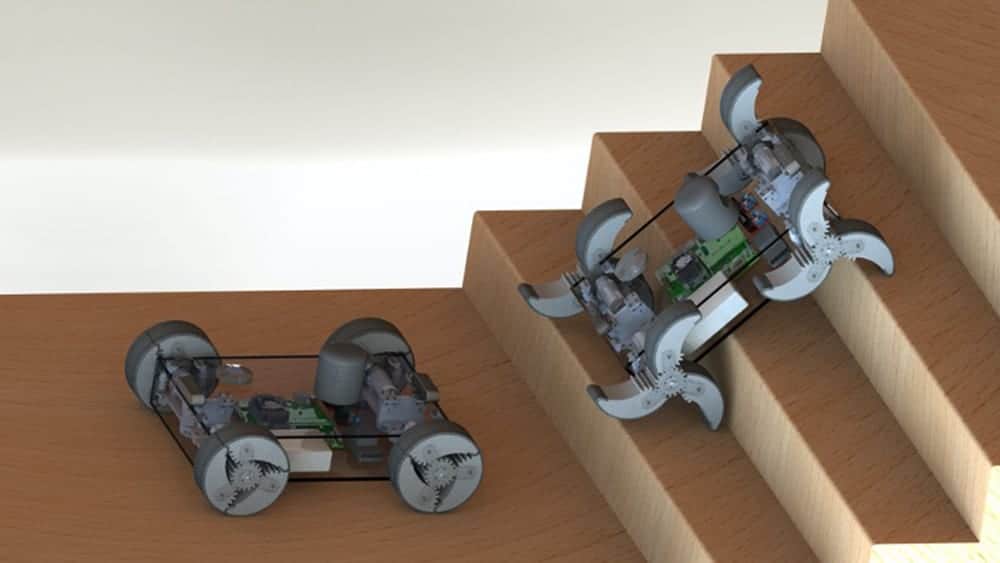
Japan sending transformable robot to Moon in 2022

Japan’s transformable lunar robot before (left) and after transformation. The Japan Aerospace...

Advanced Computer Modeling Predicts Molecular-Qubit Performance | HPCWire

A qubit is the delicate, information-processing heart of a quantum device. In...

Supercomputers Shine New Light on Ocean Turbulence

Scientists at the University of Cambridge and the University of Massachusetts Amherst...

Home

Highly Niched Headhunters Specialized in Physical AI/Robotics, High-Performance Computing, Unmanned/Autonomous Systems, Defense Technology and Energy.

Specializations

We recruit across complex engineering markets where understanding the technology is critical to finding the right talent.

How We Work

Overview of how PACE partners with teams: Our process, what clients get, and why PACE is different.

About Us

PACE’s story, values, and culture define how we operate and who we are.

News & Insights

Stay up to date on industry trends.

Contact

All the information needed for anyone interested in contacting us.