The IEEE Computer Society (IEEE CS) known for reporting top technology trends in computing, today reveals the official scorecard for its 2022 Technology Predictions. The scorecard for the 2022 predictions indicates the level of performance and impacts achieved for currently trending technologies against the projections made in January 2022. The IEEE CS Technology Predictions for […]

Computers already use artificial intelligence to improve the resolution of fuzzy images, to create images imitating the style of particular painters based on photographs, and to render realistic portraits of people who do not actually exist. The underlying method is based on what are referred to as GANs (Generative Adversarial Networks). Source: Technische Universität München […]

With use cases like computer vision, natural language processing, predictive modeling, and much more, deep learning (DL) provides the kinds of far-reaching applications that change the way technology can impact human existence. The possibilities are limitless, and we’ve just scratched the surface of its potential. The post Designs to Overcome Challenges to Deep Learning Infrastructure […]

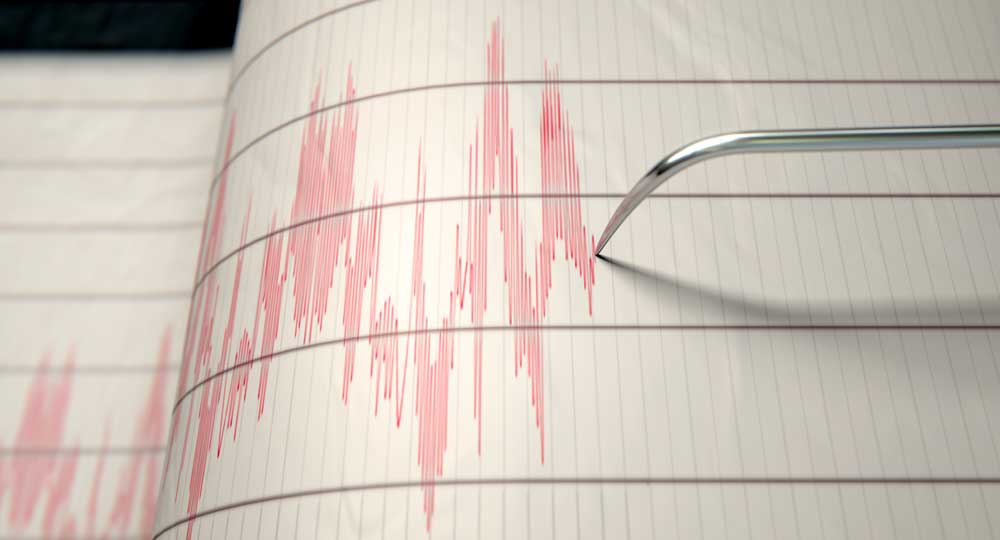
An artificial-intelligence approach borrowed from natural-language processing — much like language translation and auto-fill for text on your smartphone — can predict future fault friction and the next failure time with high resolution in laboratory earthquakes. The technique, applying AI to the fault’s acoustic signals, advances previous work and goes beyond by predicting aspects of […]

The amount of energy used for computing is climbing at an exponential rate. Business intelligence and consulting firm Enerdata reports that information, communication and technology accounts for 5% to 9% of total electricity consumption worldwide. Source: Karen Walker, University of Virginia School of Engineering and Applied Science & phys.org The post Engineers Work on New […]

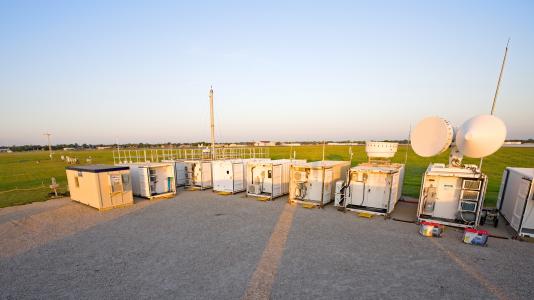
Clouds come in all shapes and sizes. While we might imagine puppies or whales or breaking waves, climatologists look at them as massive bundles of water in various forms that contribute to the daily weather, and ultimately, climate. The numbers, shapes and sizes of the liquid drops and ice crystals contained in a cloud, for […]
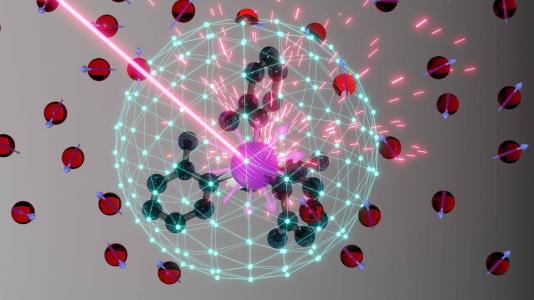
Scientists have demonstrated that they can extend the lifetime of a molecular qubit by altering the surrounding crystal’s structure to be less symmetrical. The asymmetry protects the qubit from noise, enabling it to maintain information for five times longer than if it were housed in a symmetrical structure. Source: Leah Hesla, Argonne The post Q-NEXT […]

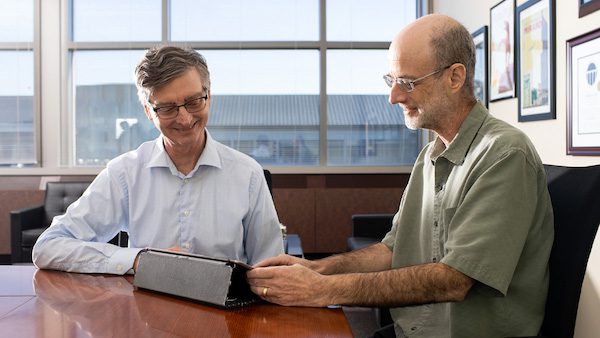
National Center for Supercomputing Applications Director Bill Gropp and Chief Scientist Daniel S. Katz were recently featured as leading voices in DEI within the supercomputing ecosystem and in research software sustainability, respectively. Source: Andrew Helregel, NCSA The post NCSA Leaders Share Vision for Future of Computational Research appeared first on HPCwire.

Although the word “qudit” might look like a typo, this lesser-known cousin of the qubit, or quantum bit, can carry more information and is more resistant to noise — both of which are key qualities needed to improve the performance of quantum networks, quantum key distribution systems and, eventually, the quantum internet.

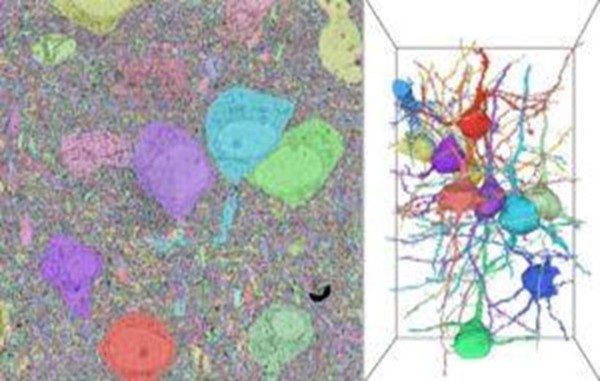
There are many mysteries about the human brain. Being able to create comprehensive maps of the human brain to identify the location of every neuron and connection of the brain will help solve the mysteries. Source: Linda Barney, ECP The post Moving Toward Advances in Brain Mapping Using Exascale Supercomputers appeared first on HPCwire.